
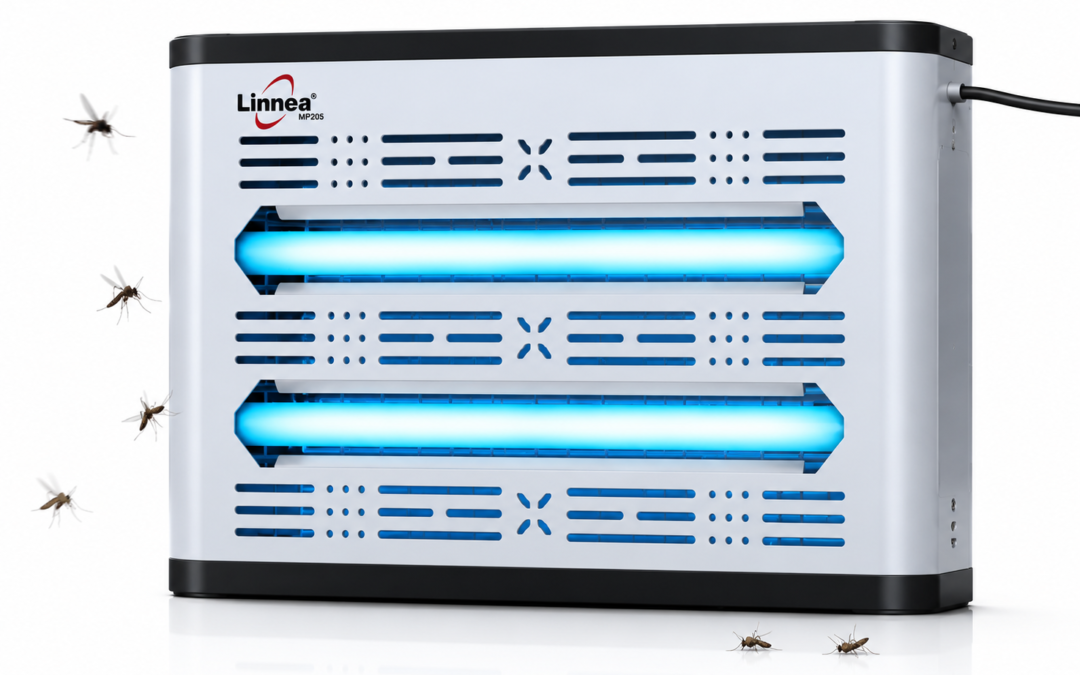
The best UV fly catcher machine for a business depends on the installation area, food-safety needs, and coverage size. Glue-based UV electric fly traps like Flintron Tech’s Linnea and Linnea LED Warrior are generally the safest, most hygienic choice for food-handling environments because they trap flies without chemicals or exposed electrocution grids.
Flies aren’t just a nuisance in food service, hospitality, and retail environments; they’re a direct threat to hygiene compliance and brand reputation. Choosing the right UV fly catcher machine comes down to matching trap technology, coverage area, and food-safety design to your specific space. This guide, from Flintron Tech, a Bangalore-based manufacturer of pest control equipment, breaks down exactly what to evaluate before you buy.
What Is a UV Fly Catcher Machine and How Does It Work?
A UV fly catcher machine, also called an electric fly catcher machine or fly trap machine, uses ultraviolet light to attract flying insects toward a capture surface, typically a glue board or an electrified grid, where the insect is trapped or killed.
There are two broad categories:
- UV glue trap machines: UV light lures flies onto a sticky, non-toxic glue board. No electrocution, no debris spray. This is the format used in Flintron Tech’s Linnea and Linnea LED Warrior units.
- Electric zapper/grid machines: UV light lures flies onto a charged wire grid that electrocutes them on contact (e.g., Flintron Tech’s Flycutor range). Effective for open, non-food-contact areas but not ideal near exposed food due to insect fragment dispersal.
Both formats fall under Integrated Pest Management (IPM), a structured, prevention-first approach to pest control widely recommended for commercial food environments.
Why Do Businesses Need Electric Fly Catcher Machines?
Flies are vectors for pathogens; they pick up bacteria from waste and drains and deposit it on food-contact surfaces within seconds of landing. For any business serving food, storing raw materials, or operating in a controlled hygiene environment, uncontrolled fly activity is a direct audit and reputational risk.
Common risk points include:
- Commercial kitchens and QSR counters near open service areas
- Food processing lines and cold storage entry/exit points
- Hotel banquet halls, buffets, and back-of-house pantries
- Retail and mall food courts
- Warehouses storing packaged food or FMCG goods
A properly placed UV fly catcher machine works as a passive, chemical-free control layer running continuously without staff intervention, unlike sprays or manual swatting.
Key Factors to Consider When Choosing a Fly Trap Machine
Before comparing models, evaluate your space against these factors:
| Factor | Why It Matters |
| Trap type | Glue board (food-safe, no debris) vs electric grid (better for open/back areas) |
| Coverage area | Match unit strength to room size; undersized units under-perform |
| Placement zone | Food-contact areas need non-electrocution, food-safe designs |
| Noise level | Electric zappers produce an audible “zap”; glue traps are silent |
| Maintenance ease | Tool-free glue board or bulb replacement saves technician time |
| Build & IP rating | Wipeable, corrosion-resistant housing suits humid or wash-down areas |
| Compliance fit | Should support your facility’s FSSAI/HACCP pest-control documentation |
Linnea vs Linnea LED Warrior: Which Flintron Fly Trap Fits Your Business?
Flintron Tech manufactures two UV glue-trap fly catcher machines under its Linnea line, built for food-safe, chemical-free fly control.
| Feature | Linnea | Linnea LED Warrior |
| Light source | UV tube-based lure | LED-based UV lure |
| Typical use case | Standard indoor commercial spaces | Spaces prioritizing lower heat output and longer light life |
| Capture method | Non-toxic glue board | Non-toxic glue board |
| Food-safety design | Yes, no electrocution grid | Yes, no electrocution grid |
| Maintenance | Periodic glue board and tube replacement | Periodic glue board replacement; LED life typically longer than tube |
| Best suited for | General commercial kitchens, hotels, retail | Facilities wanting reduced energy draw and heat near food zones |
As a manufacturer, Flintron Tech designs both units around the same core principle: attract without contaminating. The choice between the two typically comes down to energy efficiency preference and how long you want between light-source replacements, rather than a difference in catch performance.
UV Fly Catcher Machines and FSSAI/HACCP Compliance in India
For Indian food businesses, pest control isn’t optional; it’s a documented requirement under FSSAI’s Schedule 4 hygiene and sanitary conditions, and a standard control point in HACCP-based food safety plans. Auditors typically expect to see:
- A documented pest control program, including equipment placement records
- Evidence that fly control devices are food-safe (no electrocution near open food, per most audit checklists)
- Regular maintenance logs (glue board changes, bulb/LED replacement)
- Devices positioned away from direct food-contact zones per manufacturer guidance
Glue-based UV traps like Linnea and Linnea LED Warrior are commonly preferred over electrocution-grid units in food-handling zones specifically because they avoid the risk of insect fragments being dispersed near food, a common audit flag.
Where to Install a UV Fly Catcher Machine for Best Results
Placement determines effectiveness more than raw unit power. General guidance:
- Position away from direct sunlight and competing light sources, which reduce UV attraction efficiency.
- Avoid mounting directly over open food prep or plating areas; even glue-trap units are best kept adjacent to, not above, food-contact zones.
- Install near entry points (doors, loading bays) and waste-adjacent areas where flies commonly enter.
- Mount at the height recommended in the unit’s manual, typically below eye level and clear of foot traffic, to maximize fly interception before flies rise toward ceiling height.
Maintenance and Glue Board / Bulb Replacement
Consistent performance depends on upkeep, not just installation:
- Glue boards: Replace once visibly full or per the manufacturer’s recommended interval a saturated board loses its capture efficiency.
- UV tubes/LEDs: UV output degrades over time even if the light still appears on; replace on schedule, not just on failure.
- Housing: Wipe down regularly, especially in kitchen or wash-down environments, to keep vents and light sources unobstructed.
How Much Does a UV Fly Catcher Machine Cost in India?
Pricing for UV fly catcher machines varies based on trap type (glue vs electric grid), coverage capacity, build quality, and whether the unit is sourced from a manufacturer or a reseller. Buying direct from a manufacturer like Flintron Tech typically offers better pricing transparency and after-sales service access compared to third-party resellers, along with support for bulk and OEM orders.
FAQs
- What is the difference between a UV fly catcher and an electric fly zapper?
A UV fly catcher (glue trap) lures flies with UV light onto a sticky, non-toxic board silent and food-safe. An electric fly zapper lures flies onto a charged grid that electrocutes them, which is louder and better suited to open, non-food areas rather than food-contact zones.
- Are UV fly catcher machines safe to use in commercial kitchens?
Glue-based UV fly catcher machines, like Flintron Tech’s Linnea, are generally considered safe for commercial kitchens since they don’t use chemicals or electrocution, avoiding insect fragment dispersal near food-prep surfaces.
- How often should I replace the glue board in a fly trap machine?
Replace the glue board once it’s visibly full of insects or dust, or per the manufacturer’s recommended schedule a saturated board significantly reduces capture performance.
- Do UV fly catcher machines help with FSSAI compliance?
Yes, food-safe UV fly traps support the pest-control documentation FSSAI expects under hygiene and sanitary conditions requirements, particularly when logs of maintenance and placement are maintained.
- Where should a UV fly catcher machine be installed?
Install near entry points, waste areas, and general room space not directly above open food and away from competing light sources like sunlight, which reduce the unit’s attraction efficiency.
- What is the difference between Linnea and Linnea LED Warrior?
Both are Flintron Tech’s glue-based UV fly traps; Linnea uses UV tube-based lighting while Linnea LED Warrior uses LED-based UV lighting, which typically offers lower heat output and a longer light-source life.
- Is it better to buy a fly catcher machine from a manufacturer or a reseller?
Buying from a manufacturer like Flintron Tech generally offers more transparent pricing, direct after-sales support, and flexibility for bulk, OEM, or dealership orders compared to third-party resellers.
Need help choosing the right fly control setup for your facility?
Flintron Tech manufactures UV fly catcher machines, electric fly zappers, and complete pest-control equipment lines built in India, backed by direct manufacturer support.
