
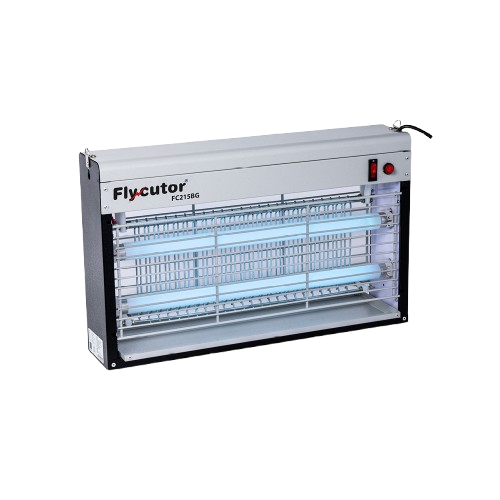
Most electric fly killer machines need the glue board or tray cleaned weekly, UV tube checks monthly, and a full deep clean every 3 months, though high-traffic food areas may need daily attention.
A dirty flying Insect killer machine stops working long before anyone notices; dust-coated UV tubes and full glue boards quietly lose their pull. Knowing how often to clean a fly killer machine is central to keeping any commercial kitchen, food plant, or hospitality space compliant and pest-free. Flintron Tech, a Made-in-India manufacturer of pest control equipment, breaks down the maintenance schedule every facility manager should follow.
Why Cleaning Frequency Matters
A fly killer machine that isn’t cleaned regularly loses effectiveness fast, even if it looks like it’s still running. Dust and grease film on the UV tubes reduce the UV-A light output that attracts flies, while a saturated glue board or overflowing debris tray simply stops catching insects.
Beyond pest control performance, an unmaintained unit becomes a hygiene liability itself; dead insects and grease buildup near food prep areas are exactly what food safety audits flag. Regular cleaning protects three things at once: catch efficiency, hygiene compliance, and equipment lifespan.
How Often to Clean a Fly Killer Machine?
Cleaning frequency depends on the machine type and the environment it’s installed in, but most commercial spaces follow a tiered schedule:
| Task | Recommended Frequency | Applies To |
| Visual inspection (fly count, debris) | Daily | All fly killer machines |
| Glue board replacement | Weekly (or when ~70% covered) | Glue board units |
| Tray/collection area cleaning | Weekly | Electric grid units |
| UV tube surface wipe-down | Monthly | All units |
| UV tube replacement | Every 6–12 months [VERIFY vs. Flintron product manual] | All units |
| Full unit deep clean (housing, vents, wiring check) | Quarterly | All units |
What Does Cleaning a Fly Killer Machine Involve?
Cleaning isn’t just wiping the exterior. A proper maintenance routine covers:
- Power down first: always disconnect the unit before opening it, especially electric grid models.
- Glue board or tray removal: replace saturated glue boards; empty and wash collection trays with mild detergent.
- UV tube wipe-down: use a dry or lightly damp cloth; UV-A tubes lose attraction power when coated in dust or grease.
- Grid/screen cleaning: For electric grid units, brush off insect residue from the killing grid.
- Housing and vent check: Clear dust from vents to maintain airflow and cooling.
- Wiring and mounting inspection: Check for loose connections or wear, particularly in high-humidity kitchens.
Which Factors Increase Cleaning Frequency?
Not every facility needs the same schedule. Cleaning frequency should scale up when:
- The unit is installed near food prep, dish-wash, or waste areas with high fly activity.
- The facility operates in a warm, humid climate common across most of India, which accelerates fly breeding cycles.
- The space handles raw meat, seafood, or dairy, where fly attraction is naturally higher.
- The unit is placed outdoors or near entry points (loading docks, delivery bays).
In these settings, daily visual checks and twice-weekly glue board changes are often more realistic than the standard weekly schedule.
FSSAI, HACCP & Indian Food Safety Context
For Indian food businesses, Flying Insect Killer Machine maintenance isn’t just good practice; it intersects directly with regulatory expectations. FSSAI’s food safety and hygiene requirements for food business operators call for documented pest control measures as part of a facility’s overall food safety management, and HACCP frameworks treat pest control as a monitored control point rather than a one-time setup.
Practically, this means facilities should maintain a simple maintenance log: date cleaned, glue board changed, UV tube status, so it’s available during audits. Flintron Tech’s Linnea and Flycutor ranges are designed for this kind of routine servicing without needing specialist tools.
Signs Your Fly Killer Machine Needs Cleaning Now
Don’t wait for the next scheduled clean if you notice:
- Visible dust or grease film on the UV tube.
- Glue board more than half-covered with insects.
- A faint or absent buzzing/humming sound from an electric grid unit.
- Flies visibly ignoring the unit or gathering nearby instead.
- A musty or decay odor near the machine.
Any of these point to reduced catch performance and call for immediate attention rather than waiting for the weekly slot.
Glue Board vs Electric Grid Machines: Maintenance Comparison
| Aspect | Glue Board Units | Electric Grid Units |
| Primary maintenance task | Glue board replacement | Tray/grid cleaning |
| Typical replacement frequency | Weekly (or 70%+ coverage) | Weekly tray clean; grid brush as needed |
| Noise during operation | Silent | Audible zap on contact |
| Best suited for | Food prep, dining, patient care areas | Warehouses, back-of-house, loading areas |
| Odor/mess consideration | Minimal, contained on board | Insect residue can scatter; needs tray |
Both formats represented in Flintron Tech’s Linnea (LED/glue board style) and Flycutor (electric zapper) ranges require routine attention, but the type of task differs, which matters when planning staff cleaning schedules.
Choosing an Easy-to-Maintain Fly Killer Machine
When maintenance simplicity is a priority, look for:
- Tool-free access to glue boards, trays, and UV tubes.
- Compact, wall-mountable design that doesn’t obstruct cleaning staff movement.
- Clear indicator or visible fill-level on glue board or collection tray.
- Manufacturer support and spares availability are a genuine advantage of buying direct from a manufacturer like Flintron Tech rather than through unbranded imports, since replacement glue boards and UV tubes stay readily available.
As a manufacturer, Flintron Tech designs its Linnea, Linnea LED Warrior, and Flycutor units for straightforward field servicing, so kitchen and facility staff can handle routine cleaning without technician call-outs.
FAQs
- How often should a fly killer machine’s glue board be changed?
Most facilities replace glue boards weekly, or sooner if the board is roughly 70% covered with insects. High-traffic kitchens or food processing units may need twice-weekly changes during peak fly season.
- Can I clean a fly killer machine without professional help?
Yes. Routine cleaning, glue board swaps, tray washing, and UV tube wipe-downs are designed for in-house staff to handle. Only wiring faults or unit repairs typically need a technician.
- Do UV tubes in fly killer machines need regular replacement?
Yes, UV-A tubes lose attraction power over time even if they still light up, but industry practice is roughly every 6–12 months.
- Is fly killer machine maintenance required for FSSAI compliance?
FSSAI’s food hygiene requirements expect food businesses to have documented pest control measures in place, and maintained fly killer machines with cleaning logs support this as part of a broader food safety management approach.
- What happens if a fly killer machine isn’t cleaned regularly?
Catch rates drop as UV tubes dim and glue boards saturate, insects may be visibly ignoring the unit, and buildup near food areas can itself become a hygiene concern flagged during audits.
- How do I know if my fly killer machine needs cleaning immediately?
Watch for a dusty or greasy UV tube, a mostly-covered glue board, reduced buzzing sound on electric grid units, or flies gathering near rather than being drawn to the machine.
- Are glue board or electric grid fly killers easier to maintain?
Glue board units involve simple board swaps and suit food-facing areas; electric grid units need tray and grid cleaning and suit back-of-house or warehouse zones. Neither is inherently “easier”; the right choice depends on placement.
Keep your facility fly-free and audit-ready. Flintron Tech manufactures easy-to-maintain fly killer machines, including the Linnea, Linnea LED Warrior, and Flycutor ranges, built for Indian commercial kitchens, food processing units, and hospitality spaces.
