
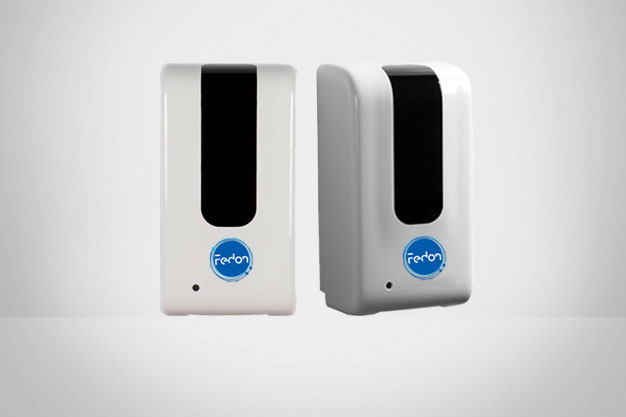
An automatic hand sanitizer dispenser uses a sensor to release a measured dose of sanitizer without touch, helping restaurants, factories, hotels and hospitals improve hand hygiene and meet FSSAI and HACCP expectations.
What Is an Automatic Hand Sanitizer Dispenser?
An automatic hand sanitizer dispenser is a wall-mounted or stand-mounted unit that releases a measured dose of sanitizer when it detects a hand beneath it. It needs no touch, so it lowers the chance of passing germs through shared surfaces in busy commercial spaces.
It dispenses alcohol-based hand rub in liquid, gel, spray or foam form. Businesses place it at entrances, production lines, reception desks and corridors, where staff and visitors need a quick hygiene step.
How Does an Automatic Hand Sanitizer Dispenser Work?
A sensor, usually infrared, detects a hand under the nozzle and signals a small pump. The pump releases a preset dose of liquid, gel or foam, then stops automatically. Power comes from batteries or a mains adapter, depending on the model.
The cycle has four steps:
- Detect: The infrared sensor picks up a hand within its sensing range.
- Trigger: The control circuit starts the pump.
- Dispense: A measured dose reaches the palm.
- Reset: The unit stops and waits for the next user.
Because there is no lever or button, nothing is shared between users except the sanitizer itself.
Sanitizer, Soap and Hand Wash Dispensers Compared
Buyers often mix up an automatic hand sanitizer, an automatic soap dispenser and an automatic hand wash dispenser. The main difference is what they dispense and whether water is needed. Sanitizer suits quick, waterless hygiene. Soap and hand wash dispensers suit washbasins.
| Dispenser type | Dispenses | Needs water? | Best for |
| Automatic hand sanitizer dispenser | Alcohol-based rub (liquid, gel, spray, foam) | No | Entrances, reception, corridors, retail floors |
| Automatic soap dispenser | Liquid or foam soap | Yes | Washrooms, pantries, kitchen sinks |
| Automatic hand wash dispenser | Hand wash liquid, often at a wash station | Yes | Food-handling stations, production entry points |
Use both types together. Sanitizer works well between tasks, but hands that are visibly dirty or greasy need soap and water.
What Are the Benefits of Automatic Dispensers?
The main benefit is hygiene without contact. Automatic dispensers remove the shared touchpoint, give a consistent dose and make hand hygiene faster for staff and visitors. They also help businesses show that hygiene controls are in place during audits.
- Touch-free use: No shared handle or pump to carry germs between users.
- Controlled dosing: A preset dose reduces spillage and wastage compared with manual pumps.
- Higher usage: Staff and guests are more likely to sanitize when it takes one second and no effort.
- Audit readiness: Visible, working stations support HACCP and FSSAI hygiene checks.
- Better guest impression: Clean, modern units signal care in hotels, restaurants and malls.
- Low effort to maintain: Refilling and cleaning the nozzle are quick routine tasks.
Where Are Automatic Dispensers Used?
Any space with high footfall or food handling can benefit. Common B2B uses include:
- Restaurants and commercial kitchens: At the kitchen entrance and near service counters.
- Food processing plants: At production entry points, next to hand wash stations.
- Hotels and QSR outlets: In lobbies, banquet areas and staff entrances.
- Retail stores and malls: At entrances, food courts and billing counters.
- Healthcare facilities: In wards, waiting areas and corridors.
- Warehouses and offices: At gates, reception and canteens.
Hand Hygiene Compliance in India: FSSAI and HACCP
Indian food businesses must maintain personal hygiene and provide hand-washing facilities for food handlers under FSSAI hygiene and sanitary requirements. HACCP (Hazard Analysis and Critical Control Points) treats personal hygiene as a basic prerequisite. Dispensers at entry points make compliance easy to see and easy to audit.
In practice, an Indian food plant or cloud kitchen usually needs:
- A hand wash station with an automatic soap or hand wash dispenser at the production entrance.
- A sanitizer dispenser after the wash station and at inter-zone transitions.
- Clear signage showing the hand hygiene sequence.
- A cleaning and refill log that auditors can check.
Hand hygiene works best alongside pest control. As a manufacturer of fly control equipment for food facilities, Flintron Tech sees both as parts of one hygiene programme. Linnea fly traps and Fedon air curtains keep insects out, while dispensers keep hands clean.
How to Choose the Right Dispenser
Choose by footfall, location and the type of sanitizer or soap you plan to use. Check capacity, dispensing mode, power source, build material and sensor reliability. Pick a supplier that offers service support and bulk supply.
Use this checklist:
- Capacity: A larger reservoir suits high-traffic entrances and reduces refill visits.
- Dispensing mode: Gel, liquid, spray or foam. Match it to your sanitizer.
- Power: Battery for easy placement, adapter for constant use.
- Material and finish: Stainless steel or durable ABS plastic for commercial areas. [VERIFY: available materials]
- Sensor performance: Consistent detection without false triggers.
- Refill type: Open refill or sealed cartridge. Consider the running cost.
- Mounting: Wall or stand, to suit the space.
- Warranty and service: Confirm after-sales support before bulk orders.
For sanitizer, the US CDC recommends alcohol-based rubs with at least 60% alcohol. The WHO publishes formulations and hand hygiene guidance. (Suggested outbound links: WHO hand hygiene guidance, CDC hand sanitizer guidance, FSSAI.)
Installation and Maintenance Tips
Install at hand height near entrances and exits, away from direct sunlight that can disturb the sensor. Refill on a schedule, clean the nozzle and sensor window regularly, and replace batteries before they run out.
- Fix units where people naturally pause, such as doors and wash stations.
- Use only the recommended sanitizer or soap to avoid clogging the pump.
- Do not top off a half-empty reservoir with a different product.
- Keep a simple refill and cleaning log for audits.
Why Work With Flintron Tech?
Flintron Tech is a Bangalore-based manufacturer of pest control and hygiene equipment, including Linnea electric fly traps, Flycutor fly zappers, Fedon air curtains, Eliminator rat bait stations, UVC sanitizers and washroom hygiene products. Its equipment is used in settings such as hotels, hospitals and food outlets, and clients include Tata, Bosch, Hilton, Sheraton and Apollo.
Flintron Tech supports bulk and small orders, OEM supply and dealership enquiries.
FAQs
- How does an automatic hand sanitizer dispenser work?
An infrared sensor detects a hand under the nozzle and starts a small pump. The pump releases a preset dose of sanitizer, then stops. The unit runs on batteries or a mains adapter, and no part needs to be touched. - What is the difference between an automatic soap dispenser and an automatic hand sanitizer?
An automatic soap dispenser releases liquid or foam soap and is used with running water. An automatic hand sanitizer releases an alcohol-based rub and needs no water. Soap removes visible dirt and grease, while sanitizer is for quick hygiene between tasks. - Is an automatic hand wash dispenser better than a manual one?
For commercial use, usually yes. Automatic units remove the shared touchpoint, give a consistent dose and encourage regular use. Manual pumps can be cheaper upfront, but they are touched by every user and are harder to keep hygienic in busy areas. - Where should I install an automatic hand sanitizer dispenser in a restaurant or factory?
Install it at the kitchen or production entrance, after wash stations, at inter-zone transitions and near service counters. In customer areas, place it at the entrance and near billing. Mount it at hand height, away from direct sunlight. - Can hand sanitizer replace handwashing?
No. Sanitizer works well on clean hands between tasks, but it is not enough when hands are visibly dirty or greasy. Food handlers should wash with soap and water first, then sanitize where the process requires it. - Can I order automatic dispensers in bulk from Flintron Tech?
Flintron Tech is a Bangalore-based manufacturer that supports bulk and small orders, plus OEM and dealership enquiries. Share your quantity, location and application, and the team will quote.
Need automatic dispensers for your kitchen, plant, hotel or store?
Talk to Flintron Tech for a quote on bulk or small orders, OEM supply or dealership partnerships.
[Request a Quote] | [Talk to Flintron Tech] | [Become a Dealer]
