
You’ve probably walked past it without giving it a second thought. A shop door stays open all day, yet the inside feels cool, clean, and controlled. Step outside and you’re immediately hit by heat, humidity, and dust. Step back in, and everything feels calm again.
Look, that difference is not accidental.
What you’re experiencing is the work of a system that doesn’t demand attention. It simply does its job in the background. This is exactly where solutions designed by Air Curtain Manufacturers start to make a real difference.
Why Open Doorways Quietly Become a Bigger Problem
Let’s be real, in most commercial and industrial spaces, doors are rarely closed. Hospitals, warehouses, restaurants, and retail stores all depend on constant movement. And every time a door opens, it becomes a weak point. External air rushes in. Dust and pollutants follow. Insects find an easy entry. At the same time, your air conditioning escapes, forcing your systems to work harder.
In Indian conditions, this problem gets amplified. Heat, humidity, and pollution are not occasional challenges; they are everyday realities. So, it’s not just about comfort anymore. It’s about hygiene, energy efficiency, and maintaining a space that feels professionally managed. This might seem like a small issue until it starts reflecting in higher costs or hygiene concerns.
Why Common Fixes Don’t Really Solve It
Honestly, most facilities try to manage this with quick fixes. Keeping doors closed sounds logical, but it slows down operations. PVC strip curtains are another option, but they often obstruct movement and wear out over time. Increasing air conditioning capacity only adds to energy costs without addressing the root issue. So, here’s the thing. It’s not just about closing a doorway. It’s about controlling what passes through it. And this is exactly where traditional methods fall short.
The Quiet Role of Air Curtains
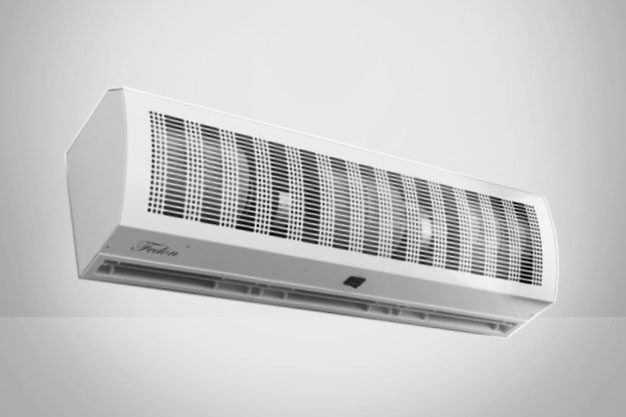
This is where Air Curtains come in, not as a complex upgrade, but as a smarter way to manage airflow. Installed above doorways, they create a continuous stream of high-velocity air that acts as an invisible barrier. There’s no physical obstruction, no disruption to movement, and no dependency on manual control. It’s one of those things you don’t notice until it’s missing. A quiet guardian that stands at your entrance, separating two environments without making a scene.
How Air Curtains Work in Real Terms
The mechanism behind Air Curtains is simple, but the execution is precise. Air is drawn into the unit, accelerated through a fan system, and then pushed out through a nozzle across the entire width of the doorway. This creates a uniform stream of air that flows downward, forming a barrier.
What this means in practice is straightforward. Clean, conditioned air stays inside, while dust, heat, and insects are kept outside. It’s not just airflow. It’s controlled separation.
What Actually Determines Performance
Not all systems perform equally, and this is where working with experienced Air Curtain Manufacturers or reliable Air curtain suppliers becomes important.
A well-performing air curtain depends on a few critical factors:
- Air velocity and consistency – The airflow must reach the floor without breaking. If it doesn’t, the barrier becomes ineffective.
- Pressure balance – The system must counteract natural air movement between indoor and outdoor environments.
- Airflow stability – Smooth, laminar airflow ensures the barrier remains intact even in high-traffic conditions.
This might sound technical, but it directly impacts how well the system works in your space.
Why More Facilities Are Adopting Air Curtains
At the end of the day, it’s not just about airflow. It’s about what that airflow protects.
A well-installed system delivers layered benefits:
- It improves hygiene by reducing dust, pollutants, and insect entry without relying on chemicals
- It supports energy efficiency by preventing loss of conditioned air
- It allows doors to remain open without compromising control
- It helps maintain compliance standards in regulated environments
It’s not just about comfort. It’s about running a cleaner, more efficient, and more reliable operation.
Where They Make the Most Impact
You’ll find Air Curtains working quietly across a wide range of environments. Hospitals and diagnostic centres rely on them for hygiene control. Restaurants and commercial kitchens use them to maintain clean zones. Warehouses and logistics hubs depend on them to manage airflow without disrupting movement.
Different spaces, different challenges. But the same principle applies — controlled airflow makes everything smoother.
Choosing the Right System
If you’re considering this, the key is not just buying a unit, but choosing the right one.
A proper solution depends on:
- Door dimensions
- Traffic frequency
- External environmental conditions
- Required airflow strength
- Noise expectations
This is why experienced air curtain suppliers and manufacturers focus on application, not just equipment. Because an incorrectly selected system doesn’t fail loudly, it simply doesn’t perform.
If your space is dealing with dust near entrances, fluctuating temperatures, frequent insect issues, or rising cooling costs, the problem is likely not operational. It’s airflow. And once you start looking at it that way, the solution becomes much clearer.
Some systems are visible. Others do their work quietly in the background. Air Curtains fall into the second category. They don’t demand attention. They don’t interrupt your space. They simply create a layer of control where it matters most. Not just cleaner air, but a more controlled, more reliable environment.
A Gentle Place to Start
If you’re beginning to notice what’s slipping in through your doorways, it might be worth exploring what the right solution from experienced Air Curtain Manufacturers like Flintron can quietly do to keep it out.
FAQs
Q1. How do air curtains work?
Air curtains project a high-velocity stream of air across a doorway, creating an invisible barrier that separates indoor and outdoor environments. This keeps out dust, insects, pollutants, and temperature changes, without blocking the movement of people or goods. Quality air curtain manufacturers engineer these units with precision motors and aerodynamic controls for maximum efficiency.
Q2. Why buy from trusted air curtain suppliers instead of generic brands?
Reputable air curtain suppliers offer certified, durable products backed by warranties and technical support. Generic alternatives may cost less upfront but drain more energy, underperform, and need frequent replacement. Established suppliers also help you choose the right unit for your specific space and application.
Q3. Which industries use air curtains the most?
Air curtains are widely used in retail stores, supermarkets, cold storage units, food processing plants, hospitals, warehouses, restaurants, and hotels, anywhere temperature control, hygiene, and energy efficiency matter.
Q4. How do I choose the right air curtain for my space?
Consider the door width, application type (commercial, industrial, or cold room), indoor-outdoor temperature difference, and foot traffic volume. Always consult experienced air curtain manufacturers or suppliers who can assess your site and recommend the best-fit model.
Q5. Do air curtains actually save electricity?
Yes. Properly installed air curtains can reduce door-related energy loss by up to 60–80%. By preventing conditioned air from escaping, they reduce the load on HVAC and refrigeration systems, lowering electricity bills and delivering strong long-term ROI.
