
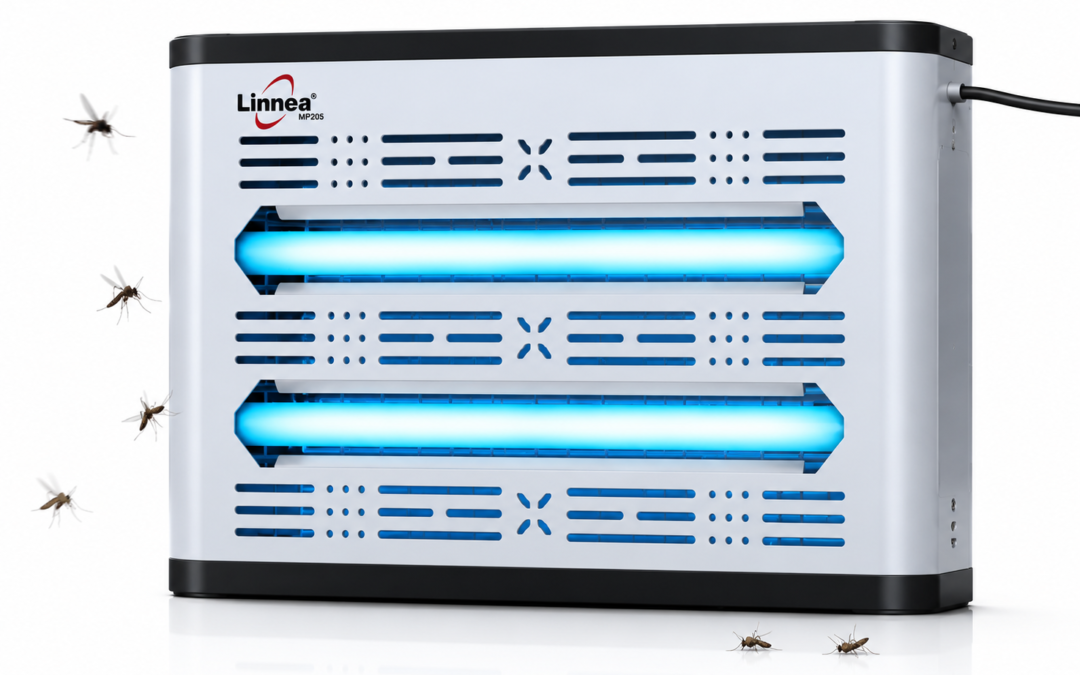
An industrial fly catcher (like Flintron’s Linnea) traps flies on a glue board using UV attraction without any impact or splatter, while a fly killer or zapper (like Flycutor) electrocutes flies on contact. The right choice depends on whether your facility is food-contact sensitive, needs silent operation, or prioritizes fast kill rates.
Choosing between an industrial fly catcher and a fly killer machine is one of the most common pest control decisions B2B facility managers face in India. Both fall under electric fly control equipment, but they work differently and suit different environments. At Flintron Tech, we manufacture both formats: the Linnea range of fly catchers and the Flycutor fly zapper, so this guide breaks down exactly how each works and which one fits your operation.
What Is an Industrial Fly Catcher?
An industrial fly catcher is a fly control machine that attracts flying insects using UV (ultraviolet) light and traps them on an internal glue board or sticky sheet, rather than killing them by electric shock. This makes it a non-electrocution, low-noise fly management solution.
Key characteristics of a fly catcher machine:
- No electrical impact: flies are trapped, not zapped, so there’s no risk of insect fragments dispersing into the air.
- Silent operation: no “zap” sound, which matters in guest-facing or quiet work environments.
- Glue board replacement: the sticky board is swapped out periodically as it fills up, giving a visual indicator of fly activity levels (useful for pest audits).
- Preferred in food-contact zones: because there’s no splatter risk, catchers are typically the safer default near open food, packaging lines, and prep counters.
Flintron’s Linnea and Linnea LED Warrior are examples of this catcher category, built for continuous industrial use with LED or UV tube attraction.
What Is a Fly Killer or Fly Zapper Machine?
A fly killer, also called a fly zapper or electric fly killer, attracts flying insects with UV light and kills them instantly using a high-voltage electrocution grid on contact. This is the classic “bug zapper” mechanism, scaled for commercial and industrial use.
Key characteristics of a fly zapper:
- Instant kill on contact: the electrified grid eliminates flies as soon as they touch it, useful where fast population control matters.
- Audible zap: the electrocution produces a click/zap sound, which is acceptable in back-of-house or non-guest areas but less suited to dining rooms or lobbies.
- Debris tray: a removable tray collects insect debris, which needs periodic cleaning to maintain hygiene and airflow.
- High-turnover environments: often preferred in warehouses, loading docks, and back-of-house kitchens where fly pressure is high and open-food exposure is limited.
Flintron’s Flycutor falls into this fly zapper category, designed for continuous-duty commercial pest control.
Industrial Fly Catcher vs Fly Killer: Key Differences
| Parameter | Industrial Fly Catcher (e.g., Linnea) | Fly Killer / Zapper (e.g., Flycutor) |
| Kill mechanism | Glue board trap (no impact) | Electric shock grid (instant kill) |
| Noise level | Silent | Audible zap sound |
| Splatter/debris risk | None; insects stick to board | Debris falls into tray, needs cleaning |
| Best suited for | Food-contact areas, guest-facing spaces, hospitals | Back-of-house, warehouses, loading docks |
| Maintenance | Replace glue board periodically | Empty and clean debris tray |
| Visual indicator of pest load | Yes, glue board shows catch volume | Limited debris tray is less visual |
| Typical placement | Near prep counters, dining areas, patient zones | Storage areas, docks, back kitchens |
Which One Should You Choose for Your Industry?
The right fly control equipment depends on how close the machine will sit to open food, how sensitive the environment is to noise, and how heavy the fly pressure is in that zone.
General guidance by industry:
- Food processing & commercial kitchens: Fly catchers (Linnea) are typically preferred near prep and packaging lines because there’s zero splatter risk around open food.
- Hotels, QSR & hospitality (front-of-house): Silent fly catchers suit guest-facing areas like lobbies and dining rooms; zappers can work in kitchens away from guests.
- Warehouses & retail/malls: Fly zappers (Flycutor) handle high fly-traffic storage and back-of-house zones efficiently, where noise and debris are less of a concern.
- Healthcare facilities: Catchers are generally favored in patient-adjacent zones for hygiene and noise reasons.
Many facilities in practice run both formats in a layered system: catchers in sensitive zones, zappers in high-traffic back areas as part of a broader Integrated Pest Management (IPM) approach.
Fly Control Compliance in India: FSSAI and HACCP Considerations
For Indian food businesses, fly control equipment choice isn’t just operational it intersects with regulatory compliance. FSSAI (Food Safety and Standards Authority of India) licensing audits and HACCP (Hazard Analysis Critical Control Point) protocols both assess pest control as a critical hygiene checkpoint.
- FSSAI audits typically review whether pest control devices are positioned to avoid contamination risk to food, packaging, and food-contact surfaces.
- HACCP-based food safety plans often flag electrocution-type fly killers as a controlled risk near open food, since insect fragments could theoretically fall into product; this is one reason glue-board catchers are commonly positioned in and around production lines.
- Documentation matters: glue board replacement logs from fly catchers can double as pest-activity trend records, which auditors often like to see during inspections.
Flintron Tech’s Fly Control Range: Linnea, Linnea LED Warrior and Flycutor
As a Made-in-India manufacturer, Flintron Tech builds both fly catcher and fly zapper formats so B2B buyers aren’t locked into one mechanism:
- Linnea an electric fly catcher using UV attraction and a glue board trap, built for continuous commercial use.
- Linnea LED Warrior is the LED-based variant of the Linnea catcher line, aimed at facilities wanting lower power draw with the same glue-board trapping approach.
- Flycutor an electric fly zapper/killer using a high-voltage grid for instant-kill fly control in back-of-house and high-traffic zones.
Flintron Tech has supplied pest control and hygiene equipment to businesses including Tata, Bosch, Hilton, Sheraton, Apollo, Cafe Coffee Day, LuLu Mall, Chaipoint, and Nandini, across food, hospitality, healthcare, and retail environments. Machines are supported by service warranties, with both bulk and small-order fulfilment, and OEM/dealership partnerships available.
Maintenance and ROI Considerations
Both formats need regular upkeep to stay effective, but the maintenance task differs:
- Fly catchers (Linnea/Linnea LED Warrior): Check and replace the glue board on a set schedule; a saturated board loses trapping efficiency and stops attracting new flies effectively.
- Fly zappers (Flycutor): Clean the debris tray regularly to prevent buildup, which can affect hygiene perception in visible back-of-house areas.
- Bulb/LED replacement: UV tubes or LEDs lose attraction strength over time on both formats and should be replaced per the manufacturer’s recommended interval.
- Placement review: Reassess machine placement seasonally, since fly pressure and airflow patterns can shift with weather and facility layout changes.
Lower ongoing consumable cost (glue boards vs. cleaning labor) and reduced contamination risk are the typical ROI levers facilities weigh when comparing the two formats for a given zone.
FAQs
- What’s the main difference between a fly catcher and a fly killer?
A fly catcher traps flies on a glue board with no impact, while a fly killer (zapper) electrocutes flies on contact using a high-voltage grid. The catcher is silent and splatter-free; the zapper is faster but produces a zap sound and debris.
- Are fly catchers safer than fly killers for food processing units?
Fly catchers are generally considered lower-risk near open food because there’s no electrocution splatter. Many facilities position catchers like Linnea near production and packaging lines specifically for this reason, though placement should follow your facility’s HACCP plan.
- Do fly zappers work well in restaurants?
Fly zappers work well in restaurant back-of-house kitchens with higher fly pressure, but the zap noise makes them less suited to dining areas. A silent fly catcher is typically preferred in guest-facing spaces.
- How often does a fly catcher’s glue board need replacement?
Replacement frequency depends on fly activity and facility conditions, so it’s best checked visually and swapped once the board is saturated.
- Can I use both a fly catcher and a fly killer in the same facility?
Yes, many businesses use catchers in sensitive, food-contact, or guest-facing zones and zappers in back-of-house or storage areas, combining both as part of a broader Integrated Pest Management approach.
- Is a fly catcher or fly killer better for FSSAI compliance?
FSSAI audits assess pest control placement relative to contamination risk; glue-board catchers are commonly favored near open food due to the absence of splatter. Final compliance decisions should be confirmed with your FSSAI auditor or consultant.
- Does Flintron Tech manufacture both fly catchers and fly killers?
Yes. Flintron Tech manufactures the Linnea and Linnea LED Warrior fly catchers as well as the Flycutor fly zapper, allowing B2B buyers to choose or combine formats based on facility zone and industry needs.
