
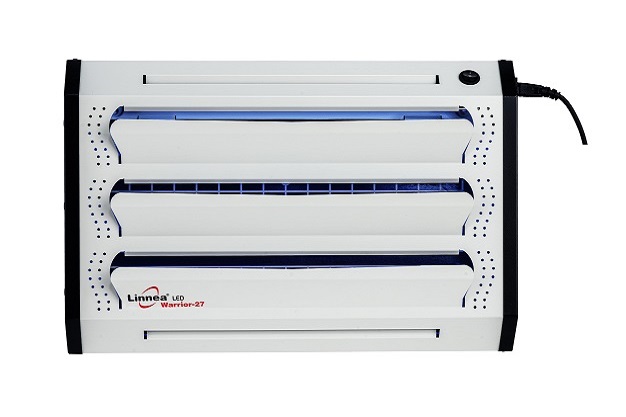
Flies do more than annoy; they carry pathogens onto surfaces, food, and equipment, putting your hygiene standards and reputation at risk. A UV fly catcher machine solves this cleanly, using ultraviolet light instead of chemicals or sprays to draw insects in and trap them. At Flintron Tech, we manufacture these machines for food, hospitality, retail, and industrial buyers across India. This guide explains how they work, the types available, and how to pick the right one for your facility.
What Is a UV Fly Catcher Machine?
A UV fly catcher machine is an electrically operated device that attracts flying insects using ultraviolet-A (UVA) light, then either traps them on an adhesive board or eliminates them on a high-voltage grid. It is also commonly called an electric fly catcher machine, insect light trap (ILT), or fly zapper.
The core principle is simple: flying insects are naturally drawn to UVA wavelengths. The machine exploits this attraction to pull insects away from your workspace and neutralise them in one enclosed unit without pesticides, odour, or manual effort.
As a manufacturer, Flintron Tech builds two families of these machines: the Linnea glue-board trap range and the Flycutor electric-grid zapper range. Both run on standard single-phase power (230V, 50Hz) and are designed for continuous commercial use.
How Does a UV Fly Catcher Machine Work?
A UV fly catcher works in three stages: the UVA lamp emits light that attracts flying insects, the insects move toward the unit, and they are then captured on a glue pad or killed by a high-voltage grid. A collection tray or adhesive board retains the insects for hygienic disposal.
Here is the process step by step:
- Attraction: UVA lamps (typically 15W or 18W tubes) emit ultraviolet light in the wavelength range that flying insects are drawn toward.
- Approach: Insects fly toward the light source from across the room.
- Capture or elimination: In glue-board models like Linnea, insects land and stick to a UV-resistant adhesive pad. In grid models like Flycutor, insects contact a high-voltage grid that eliminates them instantly.
- Containment: Dead insects collect on the glue board or drop into a removable tray, keeping them out of sight and easy to clear.
This chemical-free method makes UV fly catchers suitable for areas where sprays and baits are unsafe, especially around food and open products.
What Are the Two Main Types of UV Fly Catcher Machines?
There are two primary types: glue-board (adhesive) traps and high-voltage electric grid traps. The right choice depends on your industry, hygiene sensitivity, and where the unit will be installed.
Glue Board UV Fly Traps (Linnea Range)
Glue-board traps capture insects silently on a replaceable adhesive pad. Because insects are retained whole rather than fragmented, these are preferred for high-hygiene zones. Flintron Tech’s Linnea range is built to align with HACCP requirements for food industries and is manufactured in galvanized iron or stainless steel (SS 304) with a powder-coated finish to resist rust and corrosion.
Common Linnea models include compact units for smaller rooms and higher-output units (30W–45W UVA) for larger, high-density areas.
Electric Grid UV Fly Zappers (Flycutor Range)
Grid traps use a high-voltage electric grid to eliminate insects on contact, with a tray at the bottom to collect the debris. Flintron Tech’s Flycutor range offers economical, high-performance units for home, commercial, and industrial use, available in GI powder-coated or SS 304 bodies with shatterproof or normal tube options.
Glue Board vs. Electric Grid: Which Should You Choose?
Both trap flies effectively; the difference is in hygiene sensitivity, noise, and setting.
| Feature | Glue Board (Linnea) | Electric Grid (Flycutor) |
| Capture method | Adhesive pad | High-voltage grid |
| Insect retention | Whole insect retained | Debris in collection tray |
| Noise | Silent operation | Audible “zap” on contact |
| Best for | Food prep, pharma, dining areas | Warehouses, kitchens, back-of-house |
| Hygiene sensitivity | Very high | Moderate to high |
| Consumables | Glue board + UVA lamp | UVA lamp |
| Material options | GI or SS 304 | GI or SS 304 |
For customer-facing or open-food zones, glue-board units are usually the safer default because there is no risk of insect fragments scattering. For back-of-house, storage, and industrial areas, grid zappers offer strong, cost-effective coverage.
Where Are UV Fly Catcher Machines Used?
UV fly catcher machines are used across any commercial environment where flying insects threaten hygiene, product quality, or customer experience. Typical B2B settings include:
- Food processing plants protecting open production lines and packaging areas.
- Restaurants, QSR, and commercial kitchens keeping prep and dining zones fly-free.
- Hotels and hospitality: discreet, silent control in lobbies and F&B outlets.
- Retail and malls: high-coverage units for entrances and food courts.
- Warehouses and cold storage protecting stored goods from infestation.
- Healthcare and pharma supporting sterile, contamination-controlled spaces.
Coverage varies by model. Smaller units suit roughly 250–350 sq. ft. of closed area, while higher-output models can cover up to 800–900 sq. ft. If a partition divides the space, multiple units are recommended.
UV Fly Catcher Machines and Food Safety Compliance in India
For Indian food businesses, fly control is not optional it is tied to regulatory compliance. The Food Safety and Standards Authority of India (FSSAI) requires food businesses to maintain effective pest management, and HACCP (Hazard Analysis and Critical Control Points) systems specifically call for monitored insect control in food-handling zones.
UV fly catcher machines support compliance because they are non-chemical, which avoids contamination risks around open food. Flintron Tech’s Linnea models are designed to match HACCP expectations for food industries. Under HACCP practice, glue boards are typically replaced every 30 days, and UVA lamps are recommended for replacement after around 5,000 hours or annually, as their effectiveness drops below 50% over time.
For auditors and quality teams, a documented fly-control programme using insect light traps is a practical, defensible part of your food safety plan.
How to Choose the Right UV Fly Catcher Machine
Match the machine to four factors: coverage area, hygiene sensitivity, environment, and mounting.
- Coverage area: Measure your space in sq. ft. and pick a model rated for it. Add units for partitioned layouts.
- Hygiene level: Choose glue-board (Linnea) for open-food and sensitive zones; grid (Flycutor) for back-of-house and industrial areas.
- Environment: For wet, humid, or pharma-grade areas, choose stainless steel (SS 304) over galvanized iron.
- Tube safety: In food or glass-sensitive zones, opt for shatterproof (sleeved) UVA tubes.
- Mounting: Confirm whether you need wall-mount, ceiling-hanging, or table-top placement.
When in doubt, our team can specify units based on your floor plan.
Maintenance and Running Costs
UV fly catcher machines are low-maintenance and cost-effective to run. The two consumables are the UVA lamp and, for glue-board models, the adhesive pad.
- Glue boards: Replace roughly every 30 days (mandatory monthly under HACCP), or sooner if heavily loaded.
- UVA lamps: Replace after about 5,000 hours or once a year to maintain attraction efficiency.
- Cleaning: Both Linnea and Flycutor units are designed for tool-free glue board and tube replacement and easy tray cleaning.
Because the electricity draw is modest and consumables are minimal, the total cost of ownership stays low even with continuous operation.
Frequently Asked Questions
- What is a UV fly catcher machine?
A UV fly catcher machine is an electric device that uses ultraviolet-A (UVA) light to attract flying insects, then captures them on an adhesive glue board or eliminates them with a high-voltage grid. It provides chemical-free, hygienic fly control for commercial and industrial spaces.
- How does a UV fly catcher machine attract flies?
Flying insects are naturally drawn to ultraviolet-A light. The machine’s UVA lamps emit this wavelength, pulling insects toward the unit from across a room. They are then trapped on a glue pad or eliminated on an electric grid, depending on the model type.
- Are UV fly catcher machines safe around food?
Yes. Because they use light rather than chemicals or sprays, UV fly catcher machines are well-suited to food areas. Glue-board models are preferred for open-food zones since insects are retained whole. Shatterproof tube options add further safety in food-handling spaces.
- What is the difference between a glue board and electric grid fly trap?
Glue-board traps (like Linnea) capture insects silently on an adhesive pad and retain them whole, ideal for high-hygiene zones. Electric grid traps (like Flycutor) eliminate insects on contact and collect debris in a tray, suited to back-of-house and industrial areas.
- How often should I replace the glue board and UV lamp?
Under HACCP guidelines, glue boards should be replaced every 30 days. UVA lamps are recommended for replacement after roughly 5,000 hours of use or annually, because their attraction effectiveness falls below 50% over time.
- What size UV fly catcher machine do I need?
It depends on your area. Compact units suit around 250–350 sq. ft. of closed space, while high-output models cover up to 800–900 sq. ft. Partitioned layouts need multiple units. Flintron Tech can recommend units based on your floor plan.
- Do UV fly catcher machines help with FSSAI compliance?
Yes. FSSAI and HACCP require food businesses to maintain effective pest management. A non-chemical UV fly catcher machine, with documented glue-board and lamp replacement, forms a practical, audit-friendly part of a food safety and pest control programme.
Ready to keep your facility fly-free?
Flintron Tech manufactures Linnea and Flycutor UV fly catcher machines for food processing, hospitality, retail, warehousing, and healthcare across India with bulk, small-order, OEM, and dealership options.
