
Picture this: a health inspector walks into your bakery on a Tuesday morning, clipboard in hand. Everything is spotless. The counters gleam, the floors are freshly mopped, and the display cases are pristine. Then, right on cue, two flies appear out of nowhere. One lands on a freshly iced cupcake, and the other settles on a cream bun. Inspection over. Reputation damaged. Revenue lost. All because of one tiny, buzzing intruder. Flies are not just annoying. They are a liability. And if you are running a commercial space, tolerating them is not an option you can afford.
Why Flies Keep Coming Back (Even When You Think You Have Fixed It)
Most businesses encounter fly problems seasonally and assume a quick spray or a hanging sticky strip will sort things out. It rarely does.
Here is what actually happens. A food packaging unit in an industrial area notices a spike in fly activity near its loading bay every summer. The manager orders pest control treatments. The flies disappear for two weeks, then return. The cycle repeats. By the end of the year, the facility had spent thousands on repeated treatments without ever solving the root problem.
The issue is not the flies themselves. It is the approach. Reactive methods address the symptom, not the pattern. Flies breed rapidly, adapt quickly, and are drawn to environments that offer warmth, moisture, and food. Without a continuous, proactive system in place, you are essentially playing catch-up indefinitely.
What Flies Are Actually Doing in Your Space
Flies do not just hover around. They are constantly moving between surfaces, waste areas, drains, and food zones. A single fly can carry pathogens picked up from a dustbin and deposit them on a prep counter within minutes.
In hospitals, this is a patient safety concern. In food retail, it is a compliance nightmare. In offices and co-working spaces, it quietly undermines staff morale and productivity. A research team in a biotech firm once traced recurring contamination in their sample storage area back to unchecked fly activity near an adjacent pantry. The fix was not a deep clean. It was systematic fly management.
How a Fly Control Machine Changes the Game
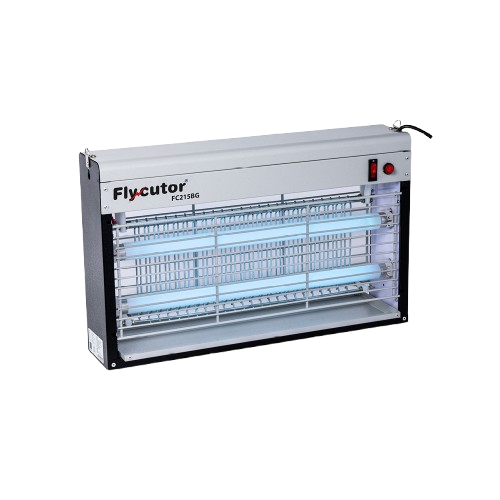
A Fly Control Machine works on a fundamentally different principle than reactive methods. Rather than waiting for fly activity to become noticeable, it operates continuously in the background, intercepting insects before they reach critical zones.
Modern units are designed to blend into their surroundings. You will find them mounted discreetly on walls in commercial kitchens, near entry points of warehouses, above counters in pharmacies, and along corridors in healthcare facilities. They run quietly. They do not require daily attention. And they work around the clock.
The mechanism is straightforward. A Flying Insect Killer Machine uses UV light to attract flying insects naturally. Once drawn in, insects are either trapped on adhesive boards or neutralised through an electric grid, depending on the model. No sprays. No odours. No disruption to operations.
For a cold storage facility managing fresh produce, installing a Flying Insect Killer Machine at every entry and exit point reduced insect activity by a measurable margin within weeks. More importantly, it eliminated the need for repeated chemical treatments that posed a contamination risk to the produce itself.
Why an Electric Fly Killer Outperforms DIY Solutions at Scale
Walk into any commercial kitchen, and you will likely spot the limitations of traditional fly control: a strip of tape here, a cloud of spray there, maybe a screen door that does not quite close all the way. These fixes are inconsistent and often look unprofessional in customer-facing areas.
An Electric Fly Killer addresses scale in a way that manual methods simply cannot. It runs continuously without human intervention. Its performance does not fluctuate based on whether someone remembered to replace the trap or reapply the spray. It integrates into the space without drawing attention, and it meets hygiene standards required in regulated industries.
A regional supermarket chain that switched from chemical treatments to wall-mounted Electric Fly Killer units across its stores reported not just reduced insect activity but also a measurable drop in customer complaints about hygiene. The technology did not change the store. It changed the perception of it.
Stop Waiting for the Problem to Find You
Fly problems do not announce themselves in advance. They show up at the worst possible moment: during a busy service, ahead of an audit, or right when a new client is visiting your facility.
The businesses that consistently maintain clean, compliant, and professional environments are not the ones reacting fastest. They are the ones who invested early in continuous solutions.
If fly activity is something your facility battles seasonally or year-round, a dedicated Fly Control Machine is not a luxury. It is a quiet, steady line of defence that protects your standards every single day.
Take the next step. Evaluate your space, identify the high-risk zones, and explore the right Flying Insect Killer Machine or Electric Fly Killer solution for your environment. Because the best time to solve a fly problem is before your customers, your staff, or your inspector notices one.
Mail us: sales.blr@flintrontech.com
Call: +91 8929100654
Address: 46/1, Bande Bommasandra, Doddagubbi P.O, Off Hennur-Bagalur Road, Kothanur, Bangalore 560 077, India.
