
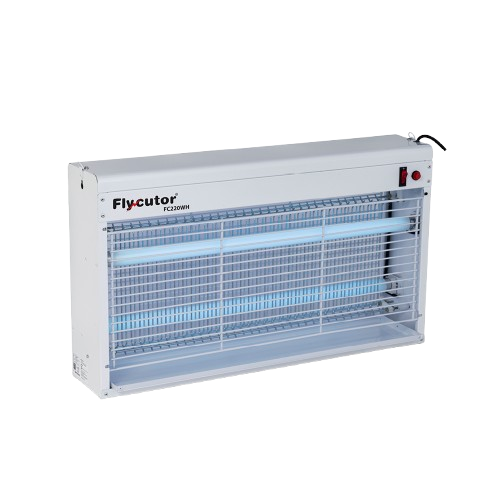
Imagine the morning rush. Your wife is grinding coriander leaves along with cloves and cinnamon. Suddenly, the mixer makes an unusual sound and stops working. You are perplexed and start thinking why this has to stop at this moment? This happens with fans, purifiers, kettles, washing machines, and your flying insect killer. Our modern lifestyle is a lot dependent on electric appliances. When you have toddlers, or if you are running a café or you are at a hospital, flying insects are both annoying and a health hazard. If the flying insect killer abruptly stops functioning, your day and life will be a mess. So, let us discuss how long these machines last. How the bulbs work, when they fade and know when they are quietly seeking your attention.
The truth about bulb life that nobody really tells you
Today, most of the insect killers use UV or UV-A bulbs. They emit a specific wavelength of UV light, usually around 365 nanometers, that is irresistible to flying insects. To us, it looks like a soft blue glow. To a fly, it looks like the brightest, most attractive thing in the room. However, the phosphor coating inside the bulb that produces this specific UV wavelength degrades over time.
In the beginning, they look fine, bright and reliable. But after a few months, they stop attracting insects. As undoubting customers, we may think that the insects just got smarter. However, it could be a case of your bulb getting weaker. We must understand that the bulbs keep glowing long after they lose their attraction power. If you are regularly using a flying insect killer, a typical bulb lasts around ten to twelve months. Some may extend a bit more, and others fade faster. The lifespan of a typical bulb inside a flying insect killer is dependent on factors like heat, humidity, dust, and how often it is switched on and off. Flintron bulbs also follow these general principles, but they are built a tad more sturdily so that the light stays stable for longer.
Why bulbs fade even when they look okay
One of the reasons could be UV strength. We must agree that nothing lasts forever. We may not see, but the UV strength drops eventually. Interestingly, insects notice it, and they move around freely, but they are not attracted to the light. Just like your mobile phone on a low brightness or battery saver mode. Some features stop working. Unfortunately, in this case, it is the power to attract insects. That is when we think that the flying insect killer has stopped working. But the fact is, they didn’t stop working; they just lost their charm.
The One-Year Rule
So, when does this fade happen?
For most high-quality UV bulbs, the effective lifespan is roughly 8,000 hours.
If you run your machine 24/7 (which is recommended for maximum hygiene), that 8,000 hours translate to about one year.
- At 0 months: The output is 100%. Your defense is up.
- At 6 months: The UV output has dropped significantly, but is still effective.
- At 12 months: The UV output is negligible. The trap is no longer trapping.
This creates a hidden risk. You walk into your kitchen or warehouse, see the blue light, and feel safe. Meanwhile, flies stroll in like a free buffet because the invisible barrier is down.
The Seasonal Reset
I always recommend a simple habit to my clients: Change your bulbs every spring.
Flying insects are seasonal. They wake up as the temperatures rise. By replacing your bulbs in March or April, you ensure your machine
How long should the whole unit last
Let us consider the housing and electrical parts. Usually, they have a much longer life, let us say, three to five years. Some may even go for seven or eight years. A lot of it is dependent on where exactly it is located. A steamy kitchen, a smoky and dusty work area may affect the lifespan of the flying insect killer. Flintron units are built to handle long hours, especially in commercial spaces where you can’t keep switching things on and off. They’re meant to run quietly in the background, doing the thankless job of catching insects so your staff doesn’t have to chase them with a cloth. Home users usually get longer life because usage is lighter. Unless you forget to clean it for months.
When to replace the whole machine instead of the bulb
Here are a few warning signs that tell you to replace the machine.
- The grill or glue boards aren’t working even after a fresh bulb.
- The transformer starts making a weird humming noise.
- The casing has rust from a damp corner.
- Insects are basically ignoring the unit altogether.
Sometimes a new bulb fixes things. Sometimes the machine is just tired.
Cleaning is oddly the thing people ignore the most
Bugs are attracted to brightness. Dust kills brightness. Sometimes the kitchen grease might clog your unit, especially in cafes and restaurants. At home, it could become sticky with perfumes and oil. What really helps is a clean wipe every two weeks and replacing the glue boards before they become a dust magnet or a bug museum.
Don’t Forget the Grid
While the bulb is the lure, the grid (or glue board) is the catch.
If you are using a zapper model (one with an electrified grid), dust is your enemy. Over time, dust and grease from the air coat the metal grid.
Why this is a problem: Dust acts as an electrical insulator. If the grid is too dirty, the voltage might not arc effectively when a fly touches it. The insect might get a mild shock and fly away, rather than being eliminated instantly.
For glue board models, the issue is simpler: space. A full glue board cannot catch anything new.
Maintenance checklist:
- Turn it off and unplug it. Safety first, always.
- Brush the grid. Use a soft, non-conductive brush to gently wipe away dust and debris from the bars.
- Check the tray. Empty the collection tray at the bottom regularly. Pests shouldn’t pile up.
The eco-friendly side of maintenance that makes people feel better
A lot of customers choose Flintron because they don’t want chemicals drifting through their homes or businesses. They want a safe, clean way to deal with insects without worrying about their kids breathing something odd.
Replacing bulbs on time helps keep things eco-conscious. A healthy bulb traps more insects so you don’t need sprays. It also reduces energy waste because the machine doesn’t run longer just to do half the job.
If you’re the sustainability type, you probably get this. Small care equals fewer replacements later. Less clutter. Less waste.
So how long should yours last
If we strip away the marketing fluff, your flying insect killer should give you years of service. Not perfect years. But good ones.
Bulbs need changing roughly once a year. Some people stretch it to fifteen months. Some replace them religiously at ten months because they can’t stand even one week of lower performance. Both approaches work.
The machine itself stays with you much longer. As long as you keep it clean and make sure it’s not sitting in a damp corner or overheating next to a toaster.
There isn’t one exact answer. But you’ll feel it when the unit slows down. You’ll notice insects staying away from it. Or the glow looks a bit too tired. And then you know it’s time.
That’s the thing about maintenance. You listen to the machine a little, and it listens back.
If you want to explore replacement bulbs or new units, or just want to see what Flintron is working on these days, you can check the range at www.flintrontech.com
Or just sit with this information for now and figure out whether your current unit deserves a new bulb or a small retirement party.
